

TIMELINE OF PROGRESS
1988
Entering the Global Scientific and Policy Dialogue on Climate Change
Brunei Darussalam became a member of the Intergovernmental Panel on Climate Change (IPCC), since its establishment, through its membership in the World Meteorological Organization (WMO) and participation in the United Nations Environment Programme (UNEP).
- The IPCC helps the world understand climate change by reviewing the latest scientific, technical, and socioeconomic research on understanding the risks of human-induced climate change.
- The IPCC publishes assessment reports that bring together findings from experts globally, including clear summaries for policymakers. These reports are widely recognised as the most credible sources of scientific information on climate change.
Source: UNFCCC
2005
Building the Foundation Back at Home
Formation of the Interim Climate Change Unit under the Department of Environment, Parks and Recreation, Ministry of Development.
- As the international community began mobilising around the urgent challenge of climate change, Brunei Darussalam took its first institutional steps to engage meaningfully on the global stage.
- An Interim Climate Change Unit was established under the Department of Environment, Parks and Recreation (JASTRe), Ministry of Development, marking the beginning of Brunei Darussalam’s formal domestic architecture for climate change governance.
- The Unit was tasked with assessing Brunei Darussalam’s prospective membership in the United Nations Framework Convention on Climate Change (UNFCCC) and understanding the obligations, opportunities, and implications that would come with it.
- The UNFCCC, a landmark international treaty adopted at the Earth Summit in Rio de Janeiro on 4 June 1992, established the foundational framework for global cooperation to combat climate change, stabilise greenhouse gas concentrations, and protect the planet for future generations. It officially entered into force on 21 March 1994, following the required number of ratifications by member states.
Sources: JASTRe, Ministry of Development
2007
Participating in Global Climate Action
Brunei Darussalam officially became a Party to the United Nations Framework Convention on Climate Change (UNFCCC).
Brunei Darussalam acceded to the UNFCCC on 7 August 2007, which into force on 5 December 2007.
As a Party to the UNFCCC, Brunei Darussalam is committed to supporting global efforts to address climate change. This includes reporting on national climate actions, engaging in international climate negotiations, and strengthening domestic measures that contribute to collective global climate action.

2009
Taking Part in Global Climate Action
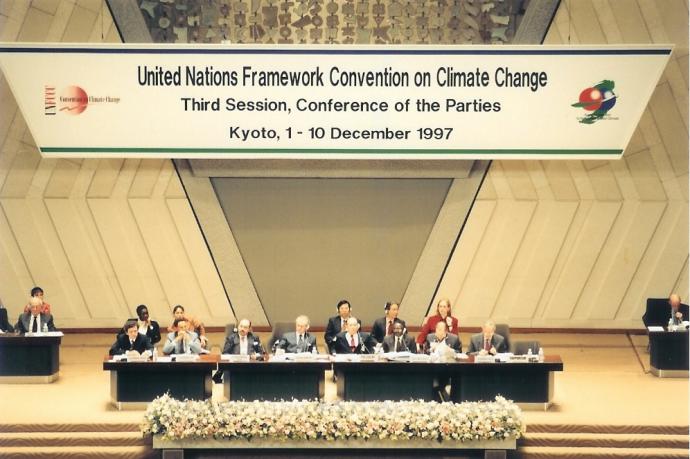
Brunei acceded to the Kyoto Protocol.
Brunei Darussalam acceded to the Kyoto Protocol on 20 August 2009.
The Kyoto Protocol is an international treaty adopted in 1997 to combat global warming by setting binding emission reduction targets for developed nations during its first commitment period (2008-2012).
Note: In 2014, Brunei Darussalam ratified to the Doha Amendment, which extended the Kyoto Protocol’s second commitment period from 2013 to 2020.
2011
Strengthening National Leadership
Establishment of the Brunei Darussalam National Council on Climate Change (BNCCC).
- The BNCCC was first established in 2011 to provide the highest level of strategic direction on climate change at the national level, co-chaired by the Minister of Development and the Minister of Energy at the Prime Minister’s Office.
2015
Supporting Global Climate Ambition
Brunei Darussalam submitted its Intended Nationally Determined Contribution (INDC).
- In response to the Lima Call for Action, Brunei Darussalam submitted its INDC that outlines the country’s voluntary initiatives and post-2020 climate actions in the lead-up to COP21 in Paris on 1 December 2015.
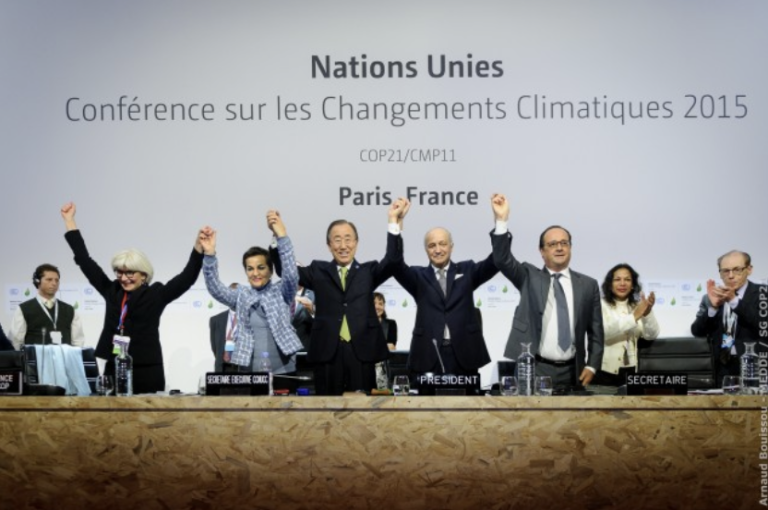
The Paris Agreement was adopted by 195 Parties.
- To strengthen global cooperation and establish a shared direction for climate action, the Paris Agreement was adopted, building upon the foundation of the Kyoto Protocol.
- The Agreement unites countries under a common goal: To limit “the increase in global average temperatures to well below 2°C above pre-industrial levels and pursue efforts to limit the temperature to 1.5°C above pre-industrial levels“.
- Recognising that countries have different circumstances and capabilities, the Paris Agreement is guided by the principle of “common but differentiated responsibilities”, enabling Parties to contribute to global climate action in ways that reflect their national context.
2016
Enhancing National Coordination Following the Paris Agreement
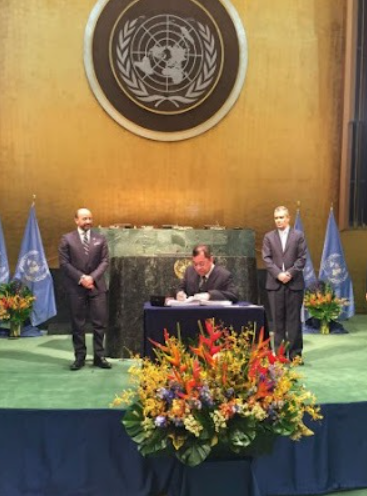
- Brunei Darussalam ratified the Paris Agreement on 21 September 2016.
- This led to the move of the portfolio from the Ministry of Development to the International Affairs Unit, Department of Energy and Industry at the Prime Minister’s Office.
Communicating our Climate Commitment for Transparency
- In April 2016, Brunei Darussalam submitted its Initial National Communication (NC1) that detailed the country’s first inventory of greenhouse gas emissions from 2010, outlined its national circumstances, and described early policies and actions for climate change mitigation and adaptation.
2017
Brunei Darussalam submitted its Second National Communication.
- On 25 November 2017, Brunei submitted its Second National Communication (NC2) under the UNFCCC, which detailed the nation’s circumstances, greenhouse gas inventory from 2014, vulnerability to climate change as well as mitigation and adaptation efforts.
2018
Advancing National Climate Coordination
Re-establishment of the Brunei Darussalam National Council on Climate Change (BNCCC), with the Brunei Climate Change Secretariat (BCCS) as the coordinating body for national climate action.
- The BNCCC was re-established to align with global efforts to reduce greenhouse gas emissions and honour its commitments under the Paris Agreement.
- Supporting the BNCCC, the Executive Committee on Climate Change (ExComm), consisting of Permanent Secretaries, Chief Executive Officers, and Managing Directors from relevant public, private, and non-government organisations (NGOs) was established along with BCCS on 28 July 2018.
2019
Whole-of-Nation Approach to Driving Climate Action
Initiated the development of the Brunei Darussalam National Climate Change Policy (BNCCP) to drive national climate action.
- The BNCCP was developed using a Whole-of-Nation approach to strategically govern and monitor greenhouse gas emissions and strengthen climate resilience.
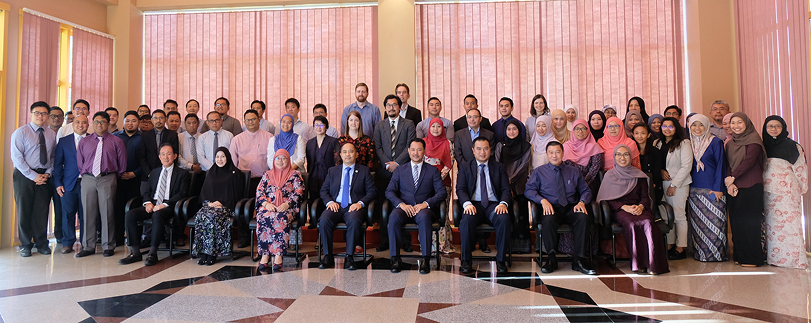
- A total of 39 agencies, consisting of government bodies, private sector agencies, research and academic institutions, and non-government organisations (NGOs) were appointed as members of the BNCCP Drafting Committee.
Youth Consultation
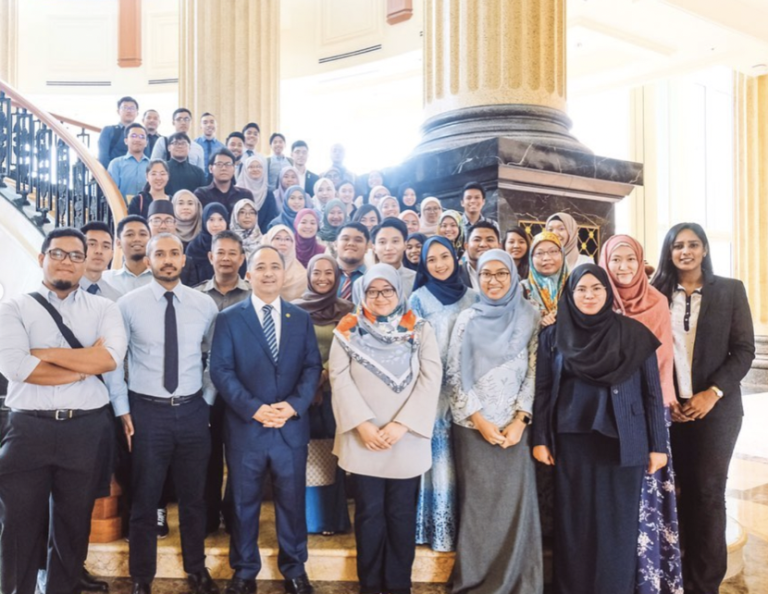
- Further to this, 51 youth representatives aged between 25 to 40 participated in a draft review of the BNCCP, reinforcing inclusivity and stakeholder engagement in the policy’s development.
2020
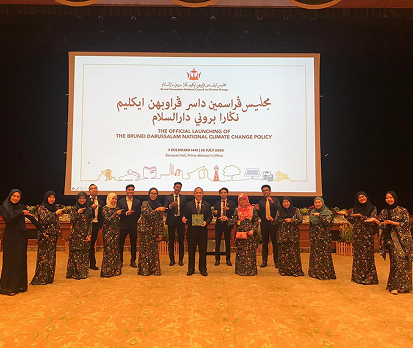
Launch of the Brunei Darussalam National Climate Change Policy (BNCCP)
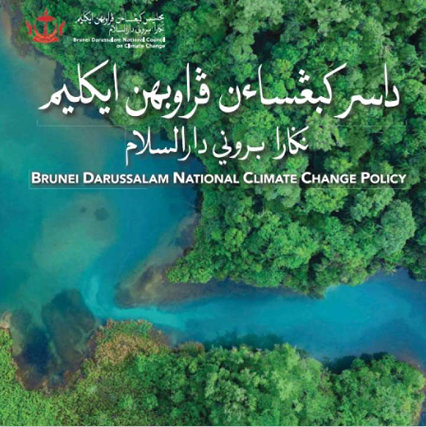
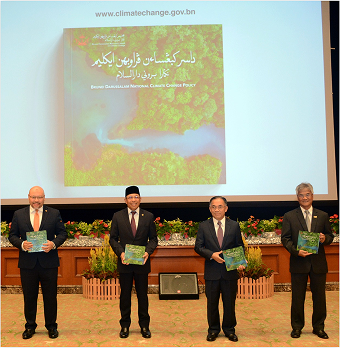
- Brunei Darussalam’s main priority in the preparation of the Nationally Determined Contribution (NDC) was developing the BNCCP, which was launched on 25 July 2020.
- The BNCCP outlines 10 key strategies to assist the country in achieving its climate change targets and commitments to pave the way towards a low-carbon and climate-resilient nation.
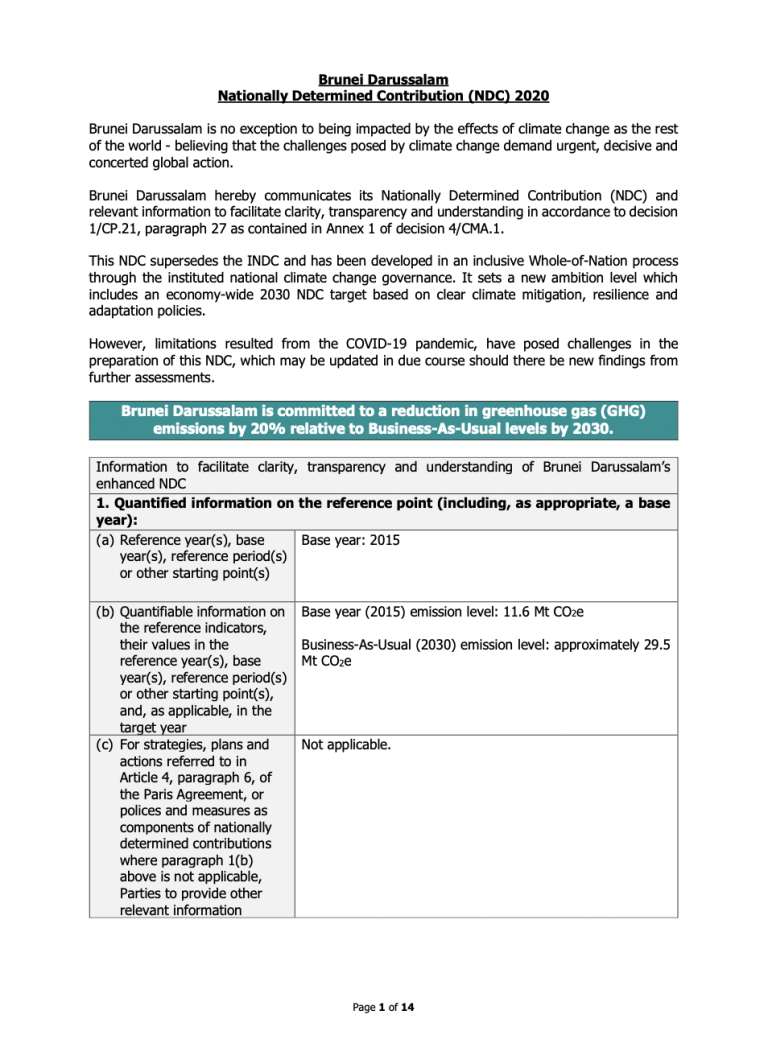
Submission of Brunei Darussalam’s NDC 2.0 to the UNFCCC
- Brunei Darussalam submitted its Second Nationally Determined Contribution (NDC 2.0), committing to reduce greenhouse gas emissions by 20% relative to 2015 Business-As-Usual levels by 2030.
2021

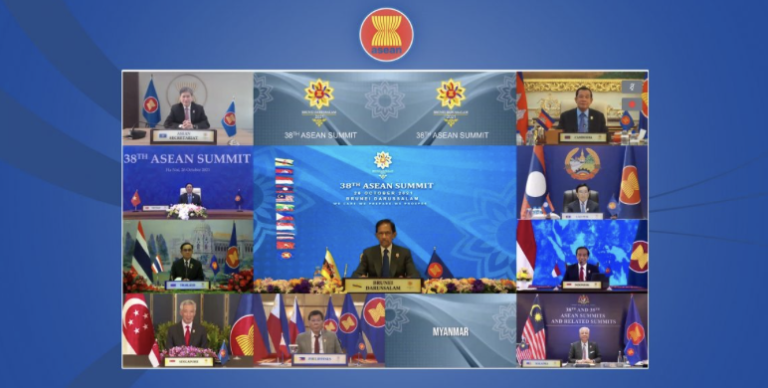
Announcement to host the ASEAN Centre for Climate Change
His Majesty Sultan Haji Hassanal Bolkiah, Sultan and Yang Di-Pertuan of Brunei Darussalam, as Chairman of the 38th and 39th ASEAN Summits.
Chairman’s Statement of the 38th and 39th ASEAN Summit “16. We reaffirmed our commitment to contributing to the goals of the United Nations Framework Convention on Climate Change (UNFCCC) and the Paris Agreement, and adopted the ASEAN Joint Statement on Climate Change to the 26th session of the Conference of the Parties to the UNFCCC. We supported in principle the establishment of an ASEAN Centre for Climate Change (ACCC) in Brunei Darussalam, which will function as an inter-governmental centre for climate change coordination and cooperation among ASEAN Member States to realise a climate-resilient and low-carbon ASEAN region.
Launching of Protokol Hijau
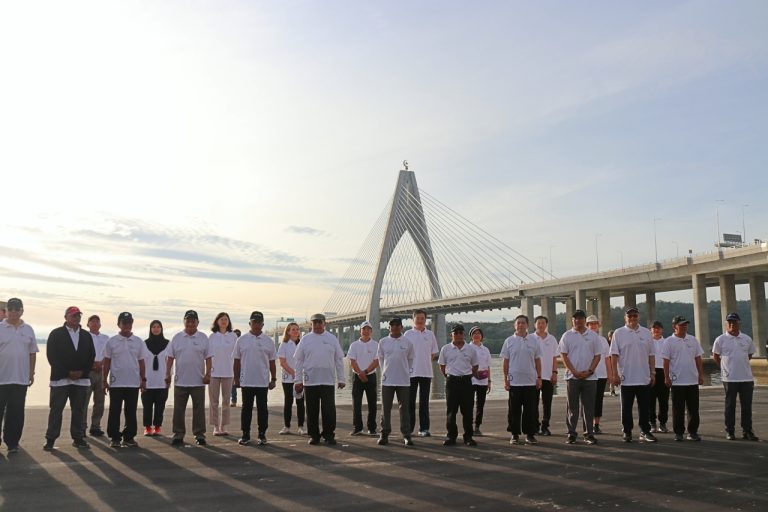
- On 30 January 2021, Protokol Hijau was launched as a guideline to reduce greenhouse gas emissions across public service premises. To mark the launch, BCCS hosted a tree-planting event facilitated by JASTRe.
- 13 Ministers, 2 Deputy Ministers, and other guests gathered at Kg. Sungai Besar base of SHOAS Bridge to plant a total of 68 trees to restore the greenery to the area that was once a construction site.
Establishment of the Industrial Emissions Committee
- To shape the direction of Strategy 1: Industrial Emissions, the working group was established to ensure collaborative implementation of strategies and alignment of action plans towards reducing emissions from the energy sector. The committee was led by the Ministry of Energy and comprises key industrial players from the oil and gas sector.
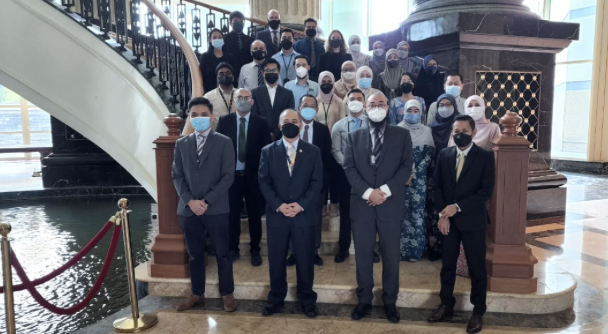
Launch of the EV Pilot Project
The Electric Vehicle (EV) Pilot Project was launched in March 2021 by the Brunei Darussalam National Council on Climate Change (BNCCC).
The 2-year pilot project was aimed to raise public awareness and interest in EV, identify suitable policies and infrastructure to support its implementation, and to understand public acceptance of this new technology.

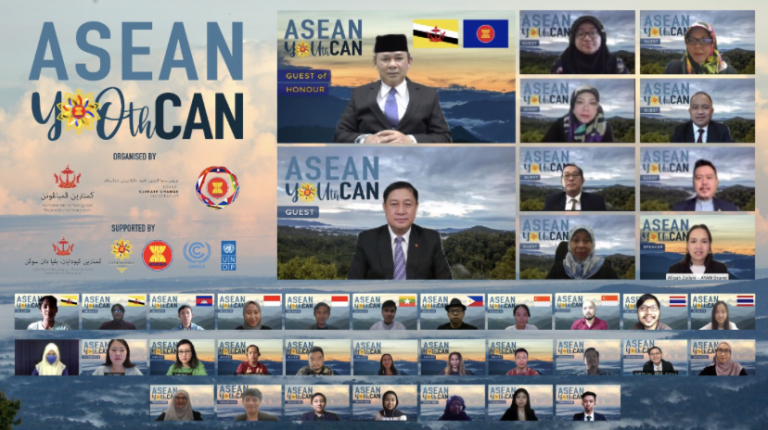
Co-organised ASEAN Youth on Climate Action with ASEAN Youth Association Network (AYAN) Brunei
The outcome was the Bandar Seri Begawan Declaration on ASEAN Youth for Climate Action.
The delegates of the 1st ASEAN Youth on Climate Action, gathered via teleconferencing in the call for urgent action on the transboundary crisis of climate change, hosted by Brunei Darussalam on the 17th of October 2021.
2022
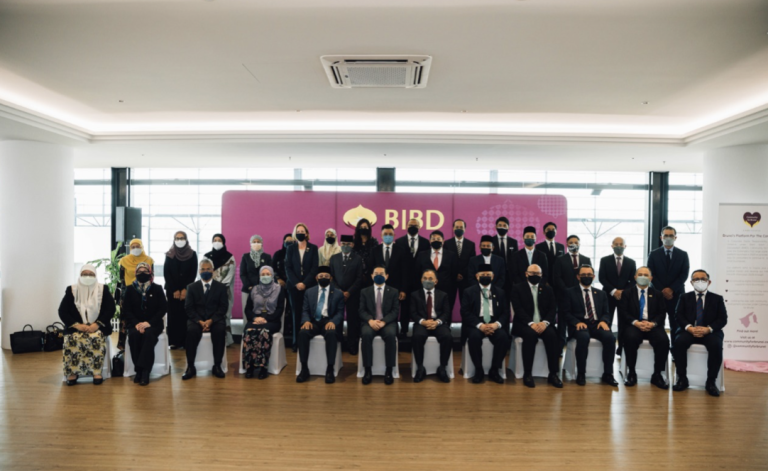
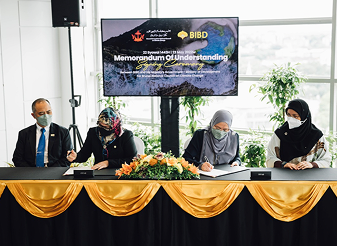
Partnership between the Brunei Darussalam National Council on Climate Change (BNCCC) and Bank Islam Brunei Darussalam (BIBD)
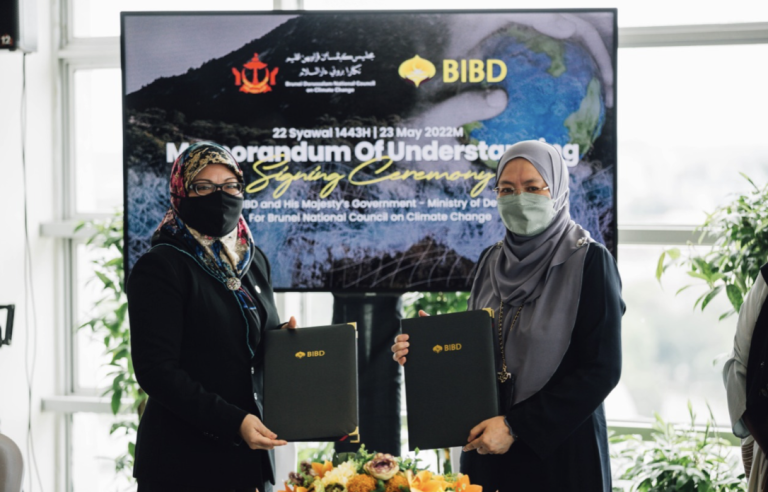
The BNCCC signed a Memorandum of Understanding (MoU) with BIBD on 23rd May 2022, signifying a key partnership in advancing Brunei Darussalam’s climate change initiatives.
The MoU aims to establish cooperation in promoting climate action solutions, reducing carbon emissions, and building climate resilience. Key areas of collaboration include the Green Protocol, tree planting, renewable energy adoption, awareness campaigns, sustainable finance, and investment in energy conservation.
- Signing on behalf of the Government of His Majesty Sultan Haji Hassanal Bolkiah Mu’izzaddin Waddaulah, Sultan and Yang Di-Pertuan of Brunei Darussalam was Yang Mulia Dr Nor Imtihan binti Haji Abdul Razak, Permanent Secretary at the Ministry of Development.
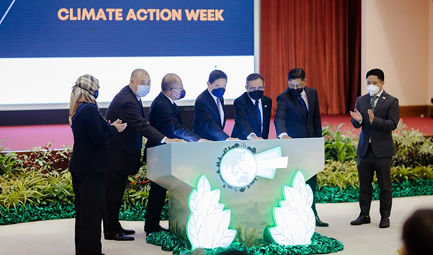
Climate Action Week at Brunei Mid-Year Exhibition and Conference (MYCE) held at ICC Berakas on 22-25 June 2022.
The Climate Action Week was organised by the Ministry of Development, represented by the Brunei Darussalam National Council on Climate Change (BNCCC), as part of the larger Brunei MYCE 2022.
Key activities and features: Conferences and seminars, exhibitions and a green job fair, aimed to raise awareness and promote a whole-of-nation approach to climate action.
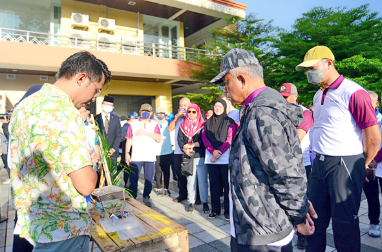
Eco-Festival: Raising Public Awareness and Action on Climate Change
- The Eco-Festival 2022 was held from 26 June to 3 July 2022 at Yayasan Complex, Bandar Seri Begawan, marking the conclusion of Climate Action Week under Brunei MYCE 2022. The festival featured religious, educational, cultural, and community-based activities promoting sustainability, including a carbon-neutral mass tree planting initiative, exhibitions by government, NGOs, schools, and the private sector, eco-friendly markets, EV test drives, and public engagement programmes encouraging low-carbon lifestyles.
2023
National Statement at COP28 in Dubai, UAE by His Majesty Sultan Haji Hassanal Bolkiah Mu'izzaddin Waddaulah, the Sultan and Yang Di-Pertuan of Brunei Darussalam
His Majesty Sultan Haji Hassanal Bolkiah Mu’izzaddin Waddaulah, the Sultan and Yang Di-Pertuan of Brunei Darussalam, attended the World Climate Action Summit and the High-Level Segment for Heads of State and Government as part of the 28th Conference of the Parties (COP28) to the UNFCCC held at Expo City Dubai, United Arab Emirates on 1 – 2 December 2023.
Key Highlights: Brunei Darussalam’s announced its role as host country of the ASEAN Centre for Climate Change (ACCC) on the international stage. The ACCC, to be headquartered in Brunei Darussalam, was marked as a key ASEAN climate initiative aimed at facilitating regional cooperation and coordination among ASEAN Member States and aligning efforts toward climate change initiatives through multilateral engagement with relevant stakeholders.
Conclusion of the Agreement on the Establishment of the ASEAN Centre for Climate Change
On 23 August 2023, during the sidelines of the 17th ASEAN Ministerial Meeting on Environment (AMME) in Vientiane, Lao PDR, Yang Berhormat Dato Seri Setia Awang Haji Juanda, Minister of Development, on behalf of the Government of Brunei Darussalam, signed the Agreement to establish the ACCC.
The handover ceremony for the signed Establishment Agreement (EA) of the ACCC to the Secretary-General of ASEAN was subsequently held, with the signed EA serving as the Agreement’s depositary.
Initiated the Development of the National Adaptation Plan (NAP)
The Adaptation and Resilience Working Group (ARWG), operating under the Executive Committee on Climate Change, initiated the process of developing a NAP through a series of stakeholder workshops and technical consultations.
- The NAP serves as guidance in deciding the country’s adaptation priorities, planning, and implementation, which will be informed by the best available data and science. It is hoped that the NAP will aid in formulating more robust adaptation strategies that are best suited to the country’s national circumstances.
To advance the NAP process, BCCS carried out a series of technical workshops and stakeholder engagement. This included workshops on Hardware Barrier and Bowtie Analyses, which focused on flooding, forest fires, and extreme heat.
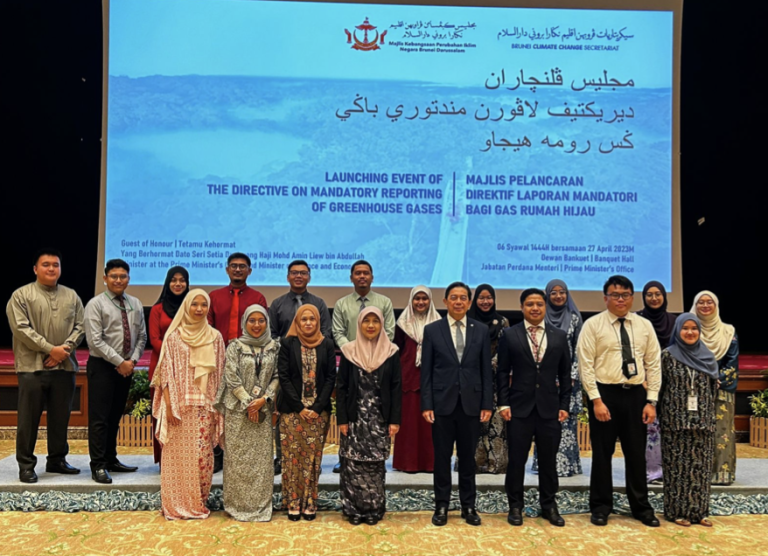
Launching of the Directive on Mandatory Reporting on Greenhouse Gases (MRD)
- The BNCCC officially launched the MRD on 27 April 2023 at the Prime Minister’s Office, officiated by Yang Berhormat Dato Seri Setia Dr Awang Haji Mohd Amin Liew bin Abdullah, Minister at the Prime Minister’s Office and Minister of Finance and Economy II, as Co-Chair of the BNCCC.
- The MRD is aligned with Strategy 9: Carbon Inventory of the Brunei Darussalam National Climate Change Policy (BNCCP), reinforcing Brunei Darussalam’s dedication to transparency and accountability in greenhouse gas (GHG) reporting, while supporting the country’s national and international climate obligations under the Paris Agreement and the UNFCCC.
- Under the MRD, all facilities that release or remove GHG are required to report their emissions quarterly and annually to the Brunei Climate Change Secretariat (BCCS), ensuring that the national GHG inventory remains transparent, complete, consistent, comparable and accurate.
- Emissions data will be gathered across 4 key sectors: Energy; Industrial Processes and Product Use (IPPU); Agriculture, Forestry and Other Land Use (AFOLU) and Waste, consistent with the IPCC guidelines for national greenhouse gas inventories.
- Recognising that facilities require time to build their reporting capacity, the MRD was introduced with a two-year grace period, providing organisations with the necessary transition time to establish the systems and processes needed for compliance.
Brunei Climate Change Secretariat (BCCS) was elevated and renamed as Brunei Climate Change Office (BCCO)
- By consent of His Majesty the Sultan and Yang Di Pertuan of Brunei Darussalam, BCCS was elevated and renamed to the BCCO, Prime Minister’s Office on 18 December 2023.

- As BCCO, the office is positioned to take on a broader strategic role, overseeing climate initiatives, strengthening inter-agency collaboration and supporting Brunei Darussalam’s long-term commitment to sustainability and low-carbon development.
2024
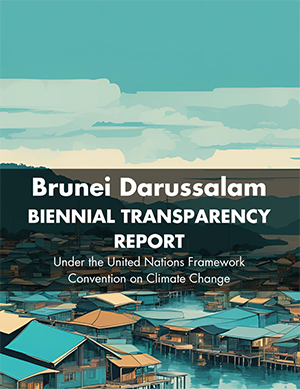
Brunei Darussalam submitted its Biennial Transparency Report (BTR)
Brunei Darussalam submitted its BTR on 31 December 2024.
The BTR communicates Brunei Darussalam’s contribution to the overall objectives of the UNFCCC and takes into account the country’s development goals in line with its national vision, Wawasan Brunei 2035.
The BTR includes information on national circumstances, national GHG inventory, mitigation actions and their impacts, domestic Measuring, Reporting and Verification (MRV), and support needed and received.
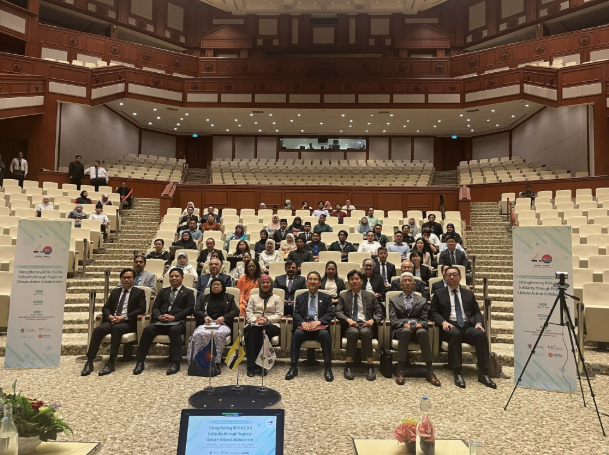
Regional Climate Action - ROK-BN-ASEAN Joint Seminar
- Organised by Korea Environmental Institute and in collaboration with BCCO and the Republic of Korea Embassy in Brunei Darussalam, the event brought together regional and national participants to strengthen collaboration on shared climate challenges and opportunities.
- Speakers from Brunei Darussalam, the Republic of Korea and ASEAN shared insights and experiences on climate change responses, regional initiatives, and ASEAN’s collaborative approach to climate action, including the establishment of the ASEAN Centre for Climate Change (ACCC).
2025
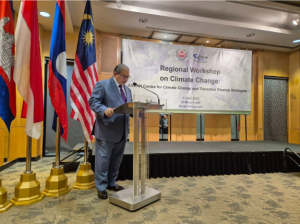
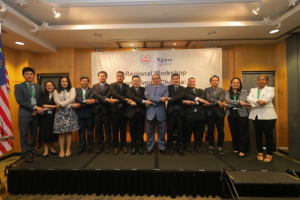
Brunei Darussalam through the Ministry of Foreign Affairs in collaboration with Economic Research Institute for ASEAN and East Asia (ERIA) hosted the Regional Workshop on Climate Change: ACCC and Transition Finance Strategies
- Yang Berhormat Dato Seri Setia Haji Erywan bin Pehin Datu Pekerma Jaya Haji Mohd. Yusof, Second Minister of Foreign Affairs officiated the opening ceremony of the workshop which was held on 21 April 2025 in Bandar Seri Begawan.
- The workshop focused on advancing the operationalisation of the ACCC and discussion on key gaps in the region, particularly in climate finance, scaling up nature-based solutions, loss and damage and enhancing implementation measures.
- Also featured were insights on carbon markets, transition finance and the Voluntary Carbon Market (VCM) guidelines presented by ERIA, Mitsubishi Research Institute and Bursa Malaysia.
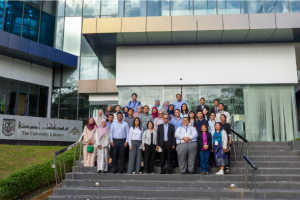
Brunei Darussalam, through BCCO, hosted a Consultation Workshop on the Operational Framework and Strategic Partnerships for the ASEAN Centre for Climate Change (ACCC)
- To support the operationalisation of the ASEAN Centre for Climate Change, BCCO in collaboration with Australia for ASEAN Futures Initiatives (AUS4ASEAN) and the ASEAN Secretariat, hosted the workshop on 27-28 May 2025.
- The opening ceremony was officiated by Yang Berhormat Dato Seri Setia Awang Haji Muhammad Juanda bin Haji Abdul Rashid, Minister of Development, as Co-Chair of the BNCCC.
- The workshop brought together representatives of the ASEAN Working Group on Climate Change along with local and regional experts to finalise key frameworks and partnerships for the ACCC.
- Participants had the opportunity to visit the ACCC Office located at UBD Business Library.
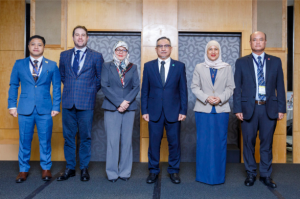
Brunei Darussalam submitted its NDC 3.0 to the UNFCCC on 16 September 2025
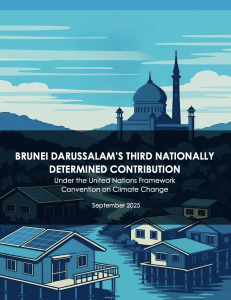
- Brunei Darussalam submitted its Nationally Determined Contribution (NDC 3.0), which set a target to reduce greenhouse gas (GHG) emissions by 20% relative to 2015 Business-As-Usual levels by 2035 .
- NDC 3.0 is intended to reflect increased ambition, respond to the outcomes of the first Global Stocktake (GST), and align with the 1.5°C goal through stronger mitigation, adaptation, finance, and equity.
Submission of the National Adaptation Plan (NAP)
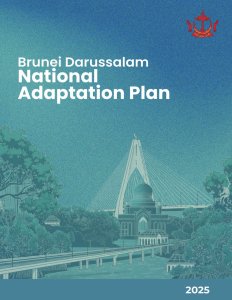
Brunei Darussalam submitted its NAP on 24 December 2025.
The NAP serves as a live document to enhance national resilience and reduce vulnerability to climate change by:
Identifying priority climate hazards and potential impacts,
Outlining existing measures and strategies to assess current and future adaptive capacity, and
Aligning climate adaptation in national planning across all sectors.
2026
Brunei Darussalam marks a key milestone that reflects the country’s full commitment to establishing the ASEAN Centre for Climate Change by signing the Instrument of Ratification (IOR).
On 20 April 2026, Brunei Darussalam ratified the agreement to establish the ACCC.
With the consent of His Majesty Sultan Haji Hassanal Bolkiah Mu’izzadien Waddaulah Sultan Yang Di-Pertuan of Brunei Darussalam, upon receiving the Instrument of Full Powers by His Majesty, the IOR was signed by Yang Berhormat Dato Seri Setia Awang Haji Muhammad Juanda bin Haji Abdul Rashid, Minister of Development, as representative of the ASEAN Ministerial Meeting on Environment (AMME).
With this, Brunei Darussalam moves forward in undertaking the necessary steps to support its implementation.
- The BNCCC and BCCO will continue to play a key role in supporting the establishment of the ACCC.
Brunei Darussalam’s Biennial Transparency Report underwent a Technical Expert Review (TER)
- As part of the UNFCCC’s Enhanced Transparency Framework, Brunei Darussalam underwent its first Technical Expert Review (1st TER) of its first Biennial Transparency Report (BTR 1) from 20 – 24 April 2026.
- The review brought together Brunei Darussalam and an international team of technical experts to assess the country’s greenhouse gas (GHG) inventory, progress towards its Nationally Determined Contribution (NDC), emission projections, policies and measures, and compliance with the transparency reporting requirements under the Paris Agreement.
- The review also identified capacity-building opportunities to further strengthen Brunei Darussalam’s climate reporting and data systems for future submissions. The final report would be available by the end of 2026.