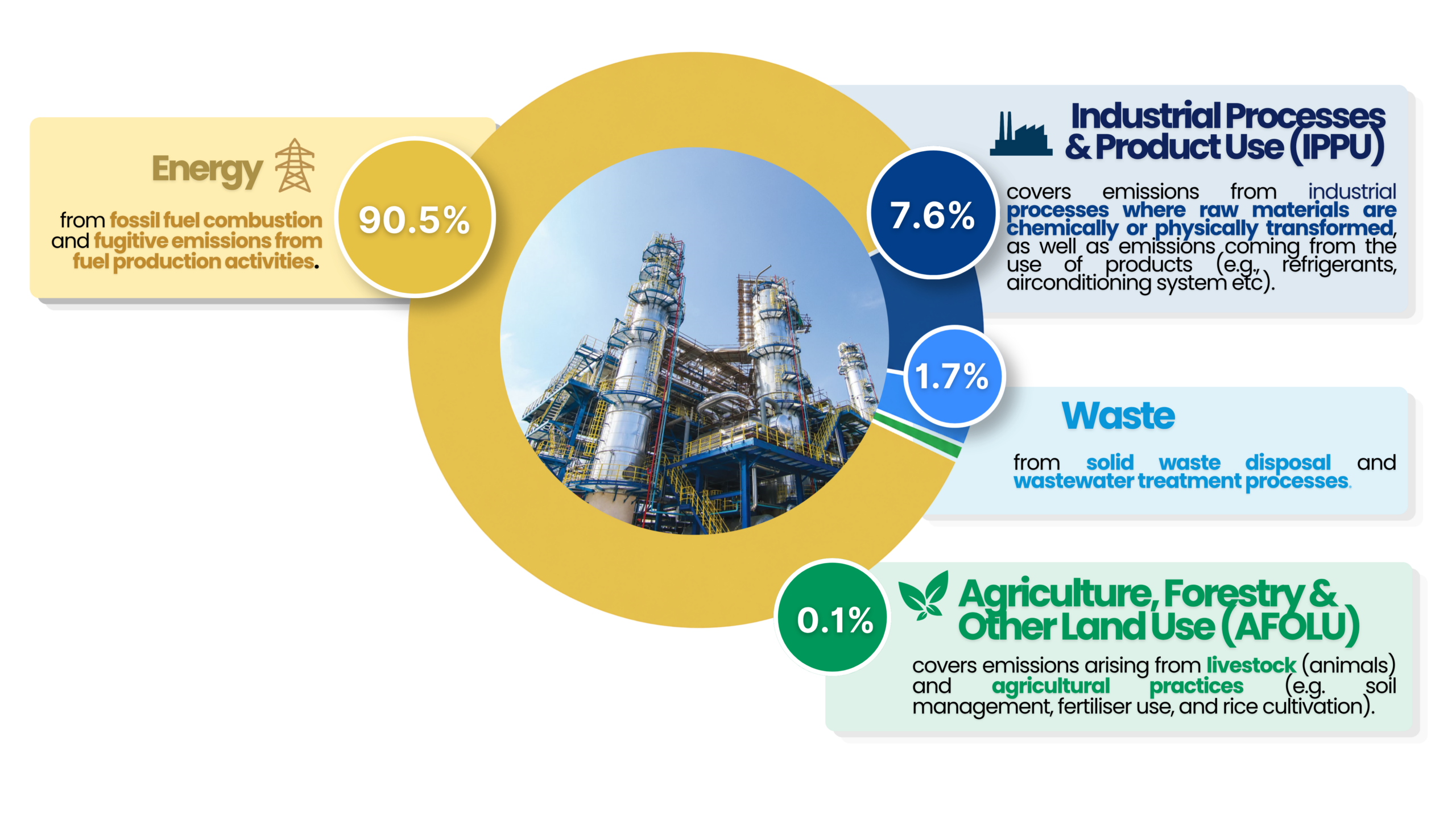
This sector includes emissions from fossil fuel combustion and fugitive emissions from fuel production activities. It covers emissions from electricity generation and heat generation, transport, manufacturing and construction, making energy the largest source of anthropogenic greenhouse gas emissions.
77.9
%
Energy Industries
(Electricity Generation
and Autoproducers)
9.8%
Transport (Domestic Aviation and Land Transport)
8.9%
Fugitive Emissions (Venting, Flaring and Other Fugitive)
2.7%
Manufacturing Industries and Constructions
0.7%
Other Sectors (Residential)
Industrial Processes & Product Use (IPPU)
(7.6%)
This sector includes emissions from industrial processes that involve chemical transformation of materials such as the production of methanol, ammonia and other chemical products. Also included are emissions from the use of products that release greenhouse gases, including refrigeration, air-conditioning systems or aerosols cans and other substances that release greenhouses gases during use, leakage or disposal.
100.0%
Chemical Processes (including Methanol Production)
AFOLU (Agriculture, Forestry and Other Land Use)
(0.1%)
This sector covers anthropogenic emissions and removals from agriculture and land use, which includes emissions from livestock, manure management, fertiliser and soil management, land-use change such as deforestation or conversion of land, and biomass burning, as well as removals by sinks, including carbon sequestration in forests, soils and other land use categories.
44.7%
Livestock
55.3%
Other Agricultural Practices including soil management, fertiliser use and rice cultivation
Waste
(1.7%)
This sector covers emissions from solid waste disposal, wastewater and waste treatment processes, including methane emissions from landfills, composting, and wastewater treatment, as well as emissions from non-energy waste incineration, primarily methane (CH₄) and nitrous oxide (N₂O).
71.2%
Waste Disposal
28.8%
Wastewater Treatment
Source: Biennial Transparency Report (2024). Brunei Climate Change Office; 2006 IPCC Guidelines for National Greenhouse Gas Inventories. Intergovernmental Panel on Climate Change (IPCC)
The Biennial Transparency Report highlights Brunei Darussalam’s progress in fulfilling its commitments under the Enhanced Transparency Framework of the Paris Agreement. It includes:
National Circumstances;
National Greenhouse Gas Inventory Report;
Climate change impacts and our adaptation measures;
Progress of Nationally Determined Contributions (NDCs); and
Insights on Financial, Technological, and Capacity-building support, along with areas for improvement.